Why US Restaurants Need QR Code Menus Before 2026
World Cup 2026 will bring millions of visitors. Learn why a QR code menu for restaurants helps US venues handle crowds and boost service speed.
World Cup 2026: A Once-in-a-Generation Hospitality Moment
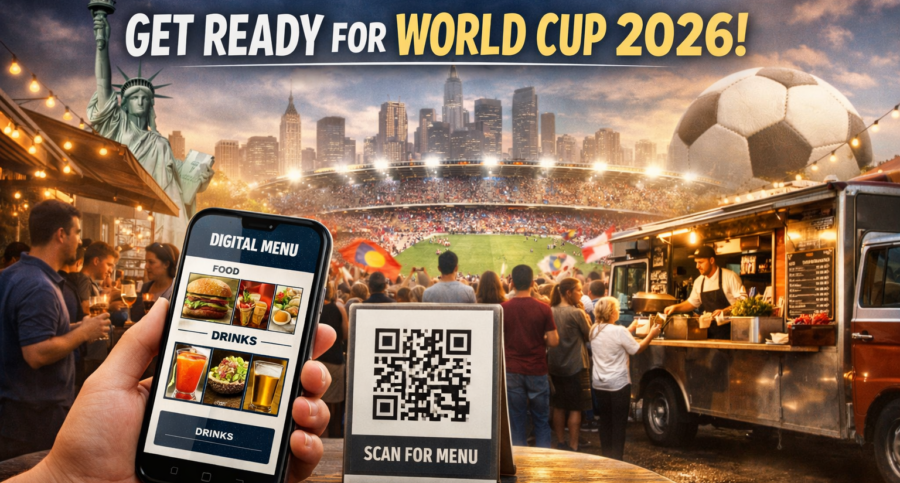
In 2026, the FIFA World Cup will arrive in the United States, bringing millions of international visitors across major cities like New York, Los Angeles, Miami, Dallas, Atlanta, and beyond. For restaurants, bars, hotels, and food trucks, this isn’t just a sporting event—it’s a massive operational stress test.
Fans won’t just attend matches. They’ll eat out multiple times a day, visit bars before and after games, grab quick food between events, and expect fast, familiar service wherever they go. For US hospitality businesses, this surge represents both a huge revenue opportunity and a real logistical challenge.
One thing is clear: the way restaurants operate today will be pushed to the limit during World Cup 2026. And one simple tool can make a measurable difference—adopting a QR code menu for restaurants before the crowds arrive.
Why the World Cup Will Change Restaurant Traffic Overnight
Large-scale international events don’t increase traffic gradually. They flip a switch.
During previous World Cups and Olympics, host cities saw:
Sudden spikes in walk-in traffic
Long lines during peak hours
Faster table turnover expectations
Shorter customer patience
Higher staff burnout
In US cities that are not used to hosting global football crowds, this shift will feel abrupt. Restaurants that normally manage predictable dinner rushes may find themselves busy from late morning until midnight.
This isn’t just about serving more customers—it’s about serving them efficiently. Menus that slow down ordering, confuse guests, or require extra staff explanation quickly become bottlenecks.
That’s where a digital menu for restaurants becomes less of a “nice-to-have” and more of an operational necessity.
International Visitors Already Expect QR Code Menus
For many international fans, QR menus are already part of daily life.
Visitors from Europe, Asia, South America, and parts of the Middle East regularly encounter:
QR codes on tables
Contactless menus replacing printed ones
Mobile-friendly menus with photos and translations
Fast ordering with minimal staff interaction
In contrast, many US venues still rely heavily on printed menus. While familiar to American customers, this can feel outdated or inefficient to international guests—especially during high-traffic events.
When visitors scan a QR code and instantly access a clear, mobile-friendly menu, it signals something important:
“This place is prepared for us.”
Adopting a QR code menu USA businesses can rely on isn’t about chasing trends. It’s about meeting global expectations during a global event.
How QR Code Menus Help Manage Large Crowds
At its core, a QR menu improves one critical area: flow.
Faster Ordering, Fewer Delays
When guests can view the menu immediately:
No waiting for menus to be handed out
No delays when menus run out
No back-and-forth questions slowing staff
This alone can shave minutes off each table’s ordering time. Multiply that by hundreds of customers per day, and the impact is significant.
Reduced Staff Pressure
During major events, hiring enough trained staff is difficult. A contactless menu helps by:
Reducing menu explanations
Minimizing repeated questions
Allowing staff to focus on service, not logistics
This directly improves restaurant crowd management without adding payroll costs.
Consistent Menu Experience
Printed menus wear out, get lost, or become outdated quickly. A digital menu ensures:
Accurate pricing
Real-time item availability
Instant updates for sold-out items
When crowds are large, consistency matters.
Benefits Across Different Hospitality Businesses
Restaurants
For traditional restaurants, a QR code menu for restaurants helps with:
Faster table turnover
Cleaner presentation during busy hours
Easy multilingual menus for international guests
You can even highlight popular dishes or limited-time specials tied to match days.
Bars
Bars will be packed during the World Cup. A digital menu for bars allows customers to:
Quickly see drink options
Decide before reaching the counter
Spend less time blocking service areas
This keeps lines moving and increases order volume.
Hotels
Hotels hosting international guests should strongly consider a hotel digital menu for:
Room service
Lobby bars and cafés
Poolside or event areas
Guests already expect digital convenience in hotels. QR menus fit naturally into that experience.
Food Trucks
Food trucks often operate in high-density zones near fan events. A food truck QR menu helps by:
Showing the full menu without crowding the window
Reducing ordering confusion
Speeding up decision-making
When space is limited, clarity is everything.
Common Objections from US Businesses (And Real Responses)
“Our customers prefer printed menus”
Many still do—but QR menus don’t have to replace printed ones entirely. They can complement them. During peak World Cup hours, QR menus act as a pressure-release valve when printed menus fall short.
“Older customers won’t use QR codes”
During the World Cup, your customer mix will skew younger and international. Even so, QR menus are optional—not mandatory. The key is flexibility.
“We don’t have time to set this up”
Modern QR menu platforms are designed for speed. Most businesses can launch a basic digital menu for restaurants in a day, not weeks.
“It feels impersonal”
In reality, QR menus free staff to provide better hospitality instead of reciting menu items under pressure.
How to Prepare Before the World Cup Starts
Waiting until 2026 is a mistake. Preparation should start now.
1. Build and Test Your Digital Menu
Create your menu early and test it during busy weekends. Gather feedback and refine the layout.
2. Optimize for Mobile
Ensure your menu loads quickly, displays clearly, and works on all devices.
3. Consider Language Support
Even simple translations for key items can improve international guest comfort.
4. Train Staff to Introduce It Naturally
Staff should confidently say:
“You can scan the QR code for our menu—it’s quick and easy.”
5. Use It During Other Events
Sports finals, festivals, and conventions are great practice runs before the World Cup crowds arrive.
The World Cup Is Temporary—The Benefits Are Not
World Cup 2026 will last a few weeks. The operational improvements from a QR code menu for restaurants will last much longer.
Businesses that adapt early will:
Handle higher volumes with less stress
Improve guest satisfaction
Reduce operational friction
Stay competitive in a changing hospitality landscape
This isn’t about chasing technology. It’s about being ready.
As millions of visitors arrive with global expectations, the restaurants, bars, hotels, and food trucks that prepare now will stand out—not just during the World Cup, but long after the final whistle blows.
A simple digital menu could be one of the smartest operational decisions US hospitality businesses make before 2026.
Customizable Menu
Add or change items anytime in seconds
Photo-Powered Menu
Visual menus help customers decide faster and increase average order value.
Contactless & Safe
Hygienic, modern, and efficient
Multilingual Menus
Serve a wider audience in their own language